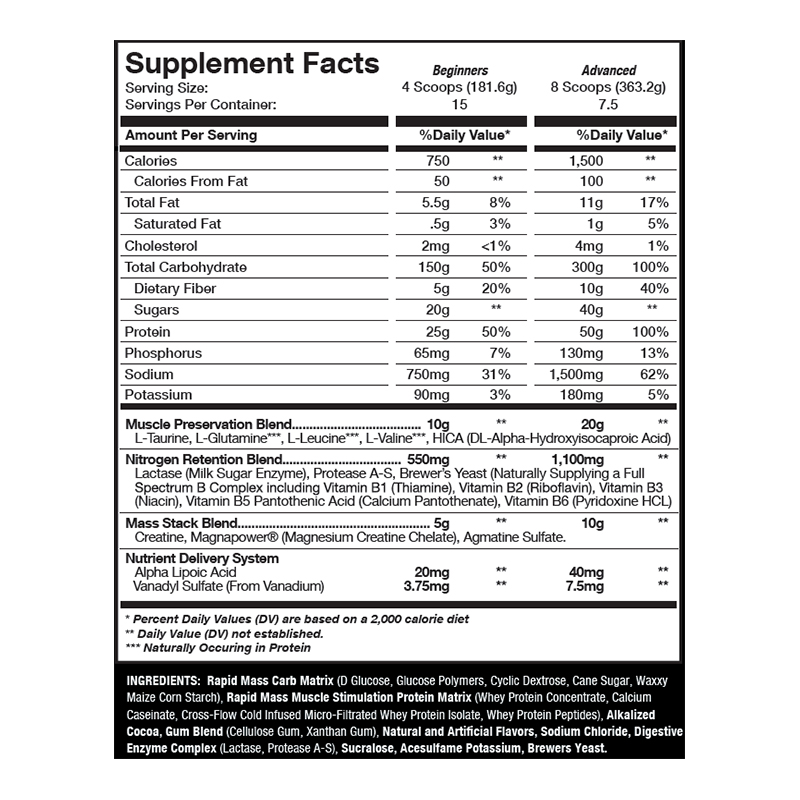
RAPID MASS MUSCLE STIMULATION PROTEIN MATRIX
Whey Protein Concentrate
Whey protein concentrate is the most common form of whey, a byproduct formed when acid is added to milk.
• Whey protein concentrate is the closest to whole food compared to other forms of protein and is 75-85% pure protein after filtration.
• A growing body of evidence suggests that dairy protein, and whey in particular may: 1) stimulate the greatest rise in muscle protein synthesis, 2) result in greater muscle cross-sectional area when combined with chronic resistance training, and 3) at least in younger individuals, enhance exercise recovery.
Whey Protein Isolate
Whey protein isolates digest and absorb rapidly and are, gram for gram, the most refined and purest form of protein (90-98% pure protein).
• It is also a potent stimulator of muscle protein synthesis due to its ability to causes a rapid increase in amino acids found in the blood stream.
• This form of whey contains little to no lactose so it may be beneficial for individuals who experience GI problems. Also due to the refinement process whey isolate contains little fat, carbs, and milk sugars.
• A 2006 study conducted by Cribb et al. found recreational bodybuilders who supplemented with whey protein isolate in conjunction with a 10-week resistance training program achieved greater gains in lean mass, strength, and decreases in body fat compared to a placebo group.
Whey Protein Peptides
Whey protein peptides are pre-digested proteins (broken down into amino acids).
• This breakdown leads to faster absorption by the body thus rapidly rebuilding and repairing muscles after a workout.
MUSCLE PRESERVATION MATRIX
L-Taurine
Taurine has a myriad of benefits. From helping the body to metabolize fat, improving insulin sensitivity, raising testosterone levels, as an antioxidant, higher performance and quicker recovery during athletic training and increasing cardiovascular health… it goes without saying that taurine is a great ingredient to have in your wheelhouse
• Zhang et al. (2004) found that individuals who supplemented with taurine for 1 week before an exhaustive exercise bout significantly improved time to exhaustion, VO2 max, and maximal workload. It also decreased exercise-induced DNA damage
L-Glutamine
L-glutamine is the most prevalent free amino acid in plasma and one of the most prevalent found in muscle tissue.
• L-Glutamine stimulates muscle protein synthesis and is effective at replenishing energy for muscles (glycogen) after exhaustive exercise which may lead to quicker recovery.
• L-Glutamine may also increase cell volume (hydration) and lead to increases in muscle hypertrophy.
• L-Glutamine may also reduce protein breakdown and support immune function.
• Lehmkuhl et al. (2003) found individual supplementing with glutamine and creatine monohydrate for 8 weeks increased body mass, lean body mass and the initial rate of power production compared to placebo.
L-Leucine
Leucine is one of the essential branched chain amino acids (BCAA). By itself it can stimulate muscle protein synthesis; the process responsible for muscle growth and recovery.
This is why it is often referred to as the “main” amino acid.
• Supplementation with at least 2/grams daily leucine has been shown decrease muscle soreness, lessen recovery time between workouts, and increase lean muscle mass.
• Howatson et al. (2012) discovered that leucine (combined with isoleucine and valine) administered before muscle-damaging resistance exercises reduced indices of muscle damage and accelerated recovery in resistance trained males
L-Valine
Valine, one of the BCAAs, promotes muscular endurance and decreases fatigue during exercise.
• When exercising tryptophan is converted to serotonin and signals the brain that the body is fatigued…ultimately leading to a decrease in muscle strength and endurance
• Since Valine competes with tryptophan for entry into the brain and prevails, less serotonin gets to the brain; ultimately leading to stronger muscular contractions, quicker recovery between sets, and prolonged muscular strength and endurance.
DL-a-hydroxy-isocaproic acid (HICA)
HICA is short for DL-Alpha-Hydroxy-Isocaproic Acidand is the end result of leucine metabolism in human tissues.
• Studies have shown that HICA can enhance anaerobic and aerobic performance as well as help to promote optimal gains in muscle mass and muscle fiber size.
• However, the biggest benefit of HICA can be the reduction of delayed onset muscle soreness (DOMS).
• Mero et. al (2010) discovered male soccer players who supplemented with HICA over a 4 week period were able to increase whole lean body mass and reduce soreness by 23% compared to placebo.
NITROGEN RETENTION BLEND
Lactase/Protease
Protease and lactase help aid in protein digestion and absorption.
• These ingredients (enzymes) may help those individuals who experience nausea, cramping or bloating when consuming whey proteins.
Brewer’s Yeast
Brewer’s yeast provides a full spectrum of B vitamins including thiamine, riboflavin, niacin, pantothenic acid, and pyridoxine HCL.
• These B vitamins play a big role in converting food into fuel.
• Due to the chromium content of brewer’s yeast, it may also help the body use insulin more effectively and this can lower blood sugar levels.
MASS STACK BLEND
Creatine MagnaPower
By combining magnesium to the creatine mixture in this compound – it allows (in a similar fashion to COP) the creatine to be absorbed and utilized for anabolic processes and prevents conversion to creatinine through the process of cyclization.
• Creatine MagnaPower pulls together both creatine and magnesium for the most effective ATP synthesis.
• The ISSN (International Society of Sports Nutrition) position stand on creatine monohydrate (CM) found that short-term CM supplementation has been reported to improve maximal power/strength (5–15%), work performed during sets of maximal effort muscle contractions (5–15%), single-effort sprint performance (1–5%), and work performed during repetitive sprint performance (5–15%). Long-term CM supplementation appears to enhance the overall quality of training, leading to 5 to 15% greater gains in strength and performance.
Agmatine Sulfate
Agmatine Sulfate helps improve nutrient partitioning which leads to an increase in muscle glycogen (carbs stored in muscle tissues) which then leads to more water retained WITHIN the muscle.
This creates a fuller look to the muscles and a greater pump while hitting the iron.
• Agmatine Sulfate also increases NO production by working as a competitive inhibitor of the enzyme NO Synthase.
• There are studies to suggest that the nutrient partitioning effects of agmatine sulfate are possibly due to its ability to increase the insulin response to carbohydrates. This could be further explained by the increased blood flow to the muscle that occurs with increased NO production.
• LH and GH levels have been shown to be increased through the effects of Agmatine Sulfate and its possible effects on the hypothalamus.
• Agmatine has also been shown to manipulate pain receptors which may allow you to train past normal pain thresholds.
NUTRIENT DELIVERY SYSTEM
Alpha Lipoic Acid
Alpha-Lipoic Acid (ALA) is a mitochondrial fatty acid that is highly involved in energy metabolism. It is synthesized in the body and can be consumed through eating meats and minimally in some fruits/vegetables.
• In supplement form, ALA has been shown to be a benefit against various forms of oxidation and inflammation. These effects carry on to benefits that protect one from heart diseases, liver diseases, diabetes, and neurological decline with age.
• ALA is also a potent anti-oxidant compound. It works with mitochondria and the body’s natural anti-oxidant defenses.
• It is also seen as an anti-aging compound since it can reverse some of the oxidant damage related effects of aging.
Vanadyl Sulfate
Vanadyl sulfate has been shown to significantly improve glycemic control and there-by improve liver and muscle sensitivity to insulin.
• Studies suggest that vanadyl sulfate helps muscle cells uptake glucose, and may help you perform better and recover faster.
• Halberstam et al. (1996) found that subjects taking small doses of vanadyl sulfate improved both hepatic and skeletal muscle insulin sensitivity by enhancing insulin’s inhibitory effect on lipolysis.